If you cannot feel your Copper-T strings or have been experiencing unexplained pelvic pain, unusual bleeding, or discomfort since your IUD was inserted, you may be worried that something is wrong. The good news is that misplaced copper-T treatment is usually straightforward once the problem is identified. Most cases can be diagnosed with an ultrasound, and many women are treated with a simple outpatient procedure. Importantly, a misplaced Copper-T is not your fault—it is usually related to the position of the device rather than anything you did. This guide explains the symptoms, causes, diagnosis, treatment options, and when you should seek specialist care.
What is a misplaced copper-T?
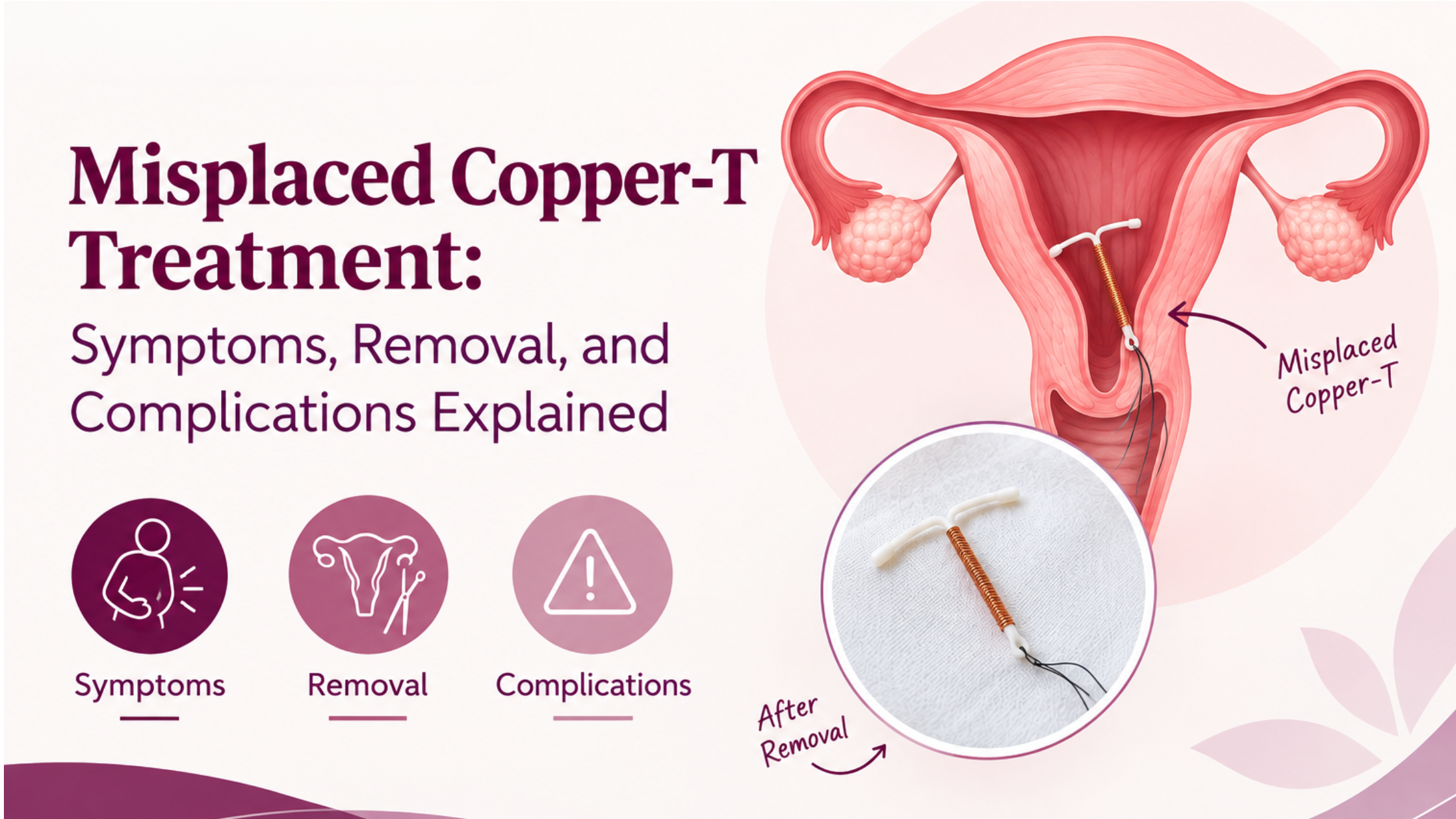
A Copper-T, also called an intrauterine contraceptive device (IUCD), is designed to sit inside the uterus to provide long-term contraception. A misplaced copper-T occurs when the device is no longer in its correct position.
Sometimes it shifts slightly within the uterus, while in other cases it may become embedded in the uterine wall or move beyond the uterus altogether. Seeking timely misplaced copper-T treatment helps ensure the device continues to work safely and effectively while preventing unnecessary complications.
Copper-T Displacement vs Copper-T Migration—What is the Difference?
Although the terms are often used interchangeably, copper-T displacement and copper-T migration are not the same.
Copper-T displacement means the IUD has shifted from its ideal position but remains inside the uterus. It may still provide contraception, although its effectiveness can be reduced depending on its location.
Copper-T migration is less common and occurs when the device passes through the uterine wall into the abdominal or pelvic cavity. This usually requires surgical removal.
Understanding the difference helps determine the most appropriate treatment and removal method.
IUD Misplacement Symptoms Every Woman Should Recognise
A misplaced copper-T does not always cause symptoms. In some women, it is discovered during a routine check-up. However, others may experience noticeable IUD misplacement symptoms, particularly if the device has shifted significantly or become embedded.
Common warning signs include
- Inability to feel the Copper-T strings
- Feeling the hard plastic part of the IUD
- New or worsening pelvic pain
- Heavy or irregular bleeding
- Unusual vaginal discharge
- Pain during intercourse
- Unexpected pregnancy
These symptoms do not always mean the Copper-T has migrated, but they should never be ignored. An ultrasound can usually confirm whether the device is correctly positioned.
Why Does Copper-T Get Misplaced?
Many women worry that they somehow caused their Copper-T to move. In reality, Copper-T displacement is usually not the result of exercise, travelling, lifting weights, or sexual activity.
Several factors can contribute to misplacement, including
- Individual differences in uterine shape or size
- Natural uterine contractions during menstruation
- Partial expulsion of the device
- Insertion-related factors
- Rarely, gradual movement through the uterine wall over time
Sometimes there is no obvious reason at all. Rather than blaming yourself, the most important step is to have the position checked if you develop symptoms or cannot feel the strings.
How is a misplaced or migrated Copper-T diagnosed?
Diagnosis begins with a discussion about your symptoms, followed by a pelvic examination. If the strings cannot be seen or the Copper-T is suspected to have moved, imaging tests are usually recommended.
Your doctor may use—
- Pelvic ultrasound (the most common first test)
- X-ray if the device cannot be located on ultrasound
- Diagnostic hysteroscopy to examine the uterine cavity directly
- CT scan in selected cases where copper-T migration outside the uterus is suspected
These investigations help determine the exact position of the device and guide the most appropriate migrated copper-T treatment or removal method.
Misplaced IUD Treatment—Options Explained
The right misplaced IUD treatment depends on where the Copper-T is located and whether it has become embedded or migrated.
Treatment options may include
- Simple outpatient removal if the strings are visible and the device is easy to remove.
- Hysteroscopic removal if the Copper-T is embedded within the uterus or the strings cannot be reached.
- Laparoscopic surgery if the device has migrated outside the uterus.
Not every misplaced Copper-T requires surgery. Many women are successfully treated with a minimally invasive procedure and return home the same day after treatment.
Click here to check more details about the hysteroscopic Copper-T removal procedure.
Copper-T Removal—In-Clinic vs. Hysteroscopic vs. Laparoscopic
The method of copper-T removal depends entirely on the position of the device.
In-Clinic Removal
If the strings are visible and the Copper-T remains correctly positioned, it can usually be removed during a routine outpatient visit with only mild discomfort.
Hysteroscopic Removal
When the strings are missing or the device is embedded in the uterine wall, hysteroscopic removal allows the doctor to visualize the uterine cavity and remove the Copper-T safely through the cervix without external incisions.
Laparoscopic Removal
If copper-T migration has occurred and the device has moved outside the uterus, laparoscopic surgery may be required. This minimally invasive approach uses small incisions and a camera to safely retrieve the device while protecting nearby organs.
The most appropriate procedure is determined only after confirming the Copper-T’s location through imaging.
Copper-T Complications If Left Untreated
Not every misplaced Copper-T causes serious problems, but leaving a confirmed Copper-T displacement or Copper-T migration untreated can increase the risk of complications.
Possible copper-T complications include
- Reduced contraceptive effectiveness and unintended pregnancy
- Persistent pelvic pain
- Heavy or irregular bleeding
- Recurrent pelvic infections
- Embedding into the uterine wall
- Uterine perforation or migration into the abdominal cavity (rare)
- Injury to nearby organs such as the bladder or bowel in uncommon cases
The good news is that these complications are uncommon when the problem is recognized early. If imaging confirms that the Copper-T has moved, your specialist will recommend the safest treatment based on its location.
Want to know more about pelvic inflammatory disease management?
When to See a Specialist Immediately?
You should arrange a medical evaluation as soon as possible if you—
- Cannot feel your Copper-T strings
- Feel the hard plastic part of the device
- Develop persistent pelvic pain
- Experience heavy or unusual bleeding
- Notice foul-smelling or abnormal vaginal discharge
- Suspect pregnancy while using a Copper-T
- Develop fever or severe abdominal pain after insertion
These symptoms do not necessarily mean your Copper-T has migrated, but they do require assessment. In most cases, a pelvic examination and ultrasound are enough to determine whether the device is correctly positioned.
Learn about the causes of abnormal vaginal discharge.
Preventing Copper-T Problems in the Future
Although not every case can be prevented, a few simple habits can help detect problems early.
- Check for the Copper-T strings once a month, preferably after your period.
- Attend follow-up visits as advised after insertion.
- Seek medical review if you cannot feel the strings or notice new symptoms.
- Discuss alternative contraceptive options with your doctor if you have experienced repeated Copper-T problems.
Remember, most women use a Copper-T safely for years without complications. Regular follow-up simply helps ensure the device remains in the correct position.
Conclusion
Discovering that your Copper-T may have moved can be worrying, but in most cases, it is a treatable condition. Modern misplaced copper-T treatment allows doctors to accurately locate the device and remove it safely using the least invasive approach possible.
If you cannot feel your Copper-T strings or have developed new pelvic pain, unusual bleeding, or other concerning symptoms, don’t assume the problem will resolve on its own. A timely consultation and simple imaging test can provide answers and, if needed, appropriate treatment.
With expert evaluation and the right approach, most women recover quickly and can confidently discuss whether another Copper-T or a different contraceptive method is best for them.
If you suspect your Copper-T has moved or you have not felt the strings recently, please do not wait for it to resolve on its own. A quick ultrasound and specialist consultation can confirm the position and, if needed, remove it safely the same week. WhatsApp +91 77259 24746 to book with Dr. Indira Sarin.
FAQs
Q1. How do I know if my Copper-T is misplaced?
A1. The most common signs are that you cannot feel the strings during a self-check, you feel the hard plastic of the IUD itself, you experience new pelvic pain, unusual bleeding, or heavier periods, or you have unexpected pregnancy symptoms. Any of these warrant a specialist visit and an ultrasound.
Q2. Can a misplaced Copper-T be removed in a normal clinic visit?
A2. Sometimes. If the strings are visible and the device is only slightly out of position, removal is a quick outpatient procedure with mild discomfort. If the device is embedded, high, or has migrated outside the uterus, hysteroscopic or laparoscopic removal is required.
Q3. Is a misplaced copper-T dangerous?
A3. It can become dangerous if left untreated. A migrated IUD can perforate the uterus, damage nearby organs like the bladder or bowel, cause chronic pain, or lead to serious pelvic infection. It also loses its contraceptive effectiveness, meaning unexpected pregnancy becomes possible.
Q4. Why did my Copper-T move?
A4. Copper-T movement is usually not caused by anything you did. Common reasons include the shape of your uterus, the technique used during insertion, natural uterine contractions during menstruation, or the device being inserted too recently after childbirth. Sometimes there is no clear cause.
Q5. Does hysteroscopic copper-T removal require hospitalization?
A5. Hysteroscopic removal is typically a day-care procedure. You are admitted, the procedure takes 20 to 40 minutes under short anesthesia, and you go home the same day. Most women resume normal activity within 24 hours.
Q6. Can I get pregnant right after copper-T removal?
A6. Yes. Fertility usually returns within one to two menstrual cycles after copper-T removal. If you do not want to conceive immediately, plan alternative contraception after removal.
Q7. Should I still use Copper-T if the last one was misplaced?
A7. That depends on why the previous one was misplaced and your personal preferences. Many women successfully use a Copper-T after a previous misplacement, especially if an experienced specialist inserts it. Others prefer to switch to hormonal IUDs or other contraceptive methods. Your specialist will help you decide.