Talking about the problem is difficult for many women, particularly one that is as awkward as a lack of ability to start urination. However, urinary hesitancy in women is not to be taken lightly. However, “just stress” or “it will pass” is a phrase I’ve heard in my clinical practice very few times. In most cases, it’s a warning from the body that there’s something deeper that needs to be addressed. You are not alone nor helpless if you have ever waited for water to flow from the toilet and then waited some more.
What Is Urinary Hesitancy?
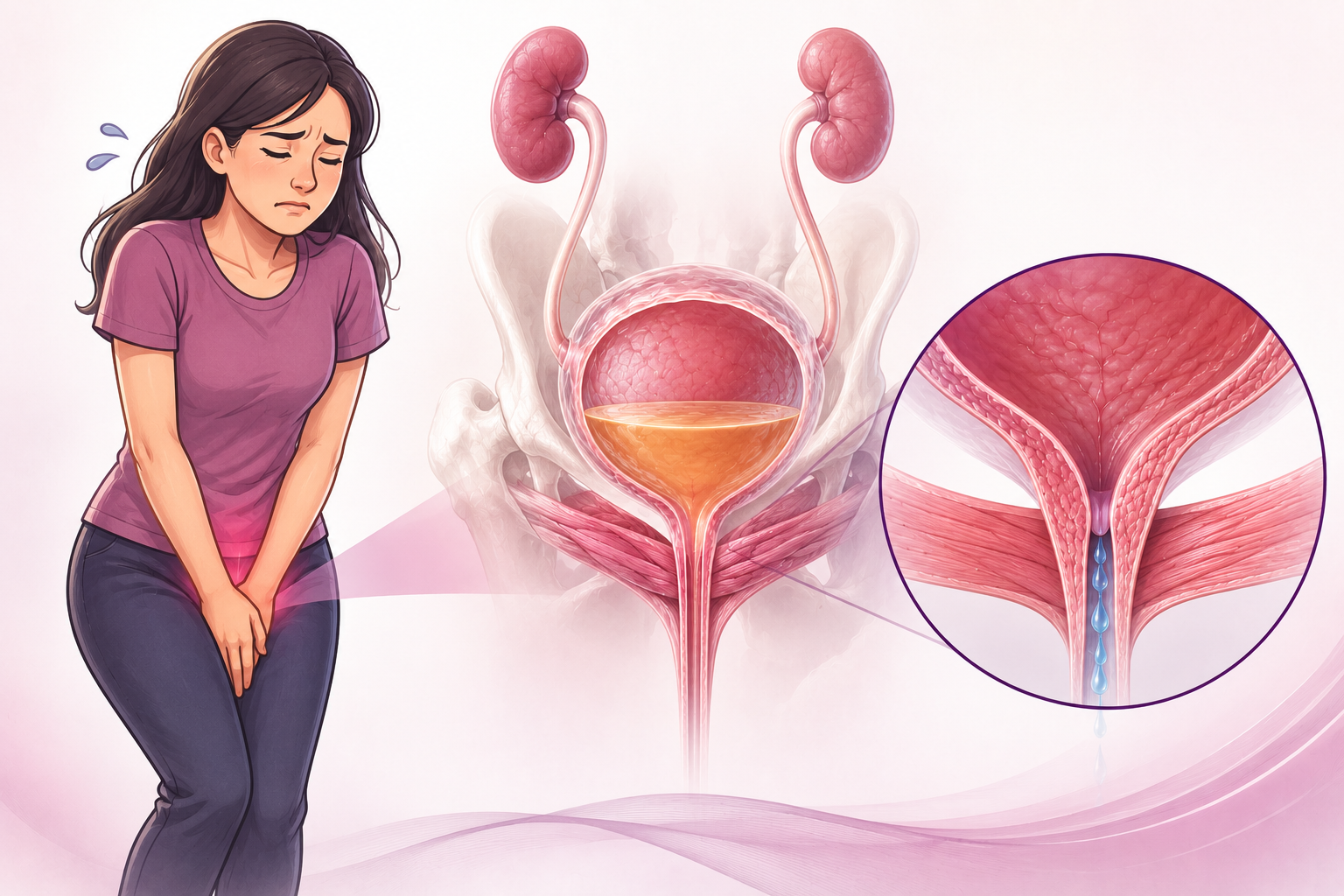
Urinary hesitancy refers to difficulties in starting urination despite the sense of the need to urinate. It can include delayed flow, straining, or weak stream, often indicating bladder, nerve, or pelvic floor problems.
Definition — what “hesitancy of micturition” means
“Hesitancy of micturition” defines a gradual delay in starting to urinate. Hesitancy of micturition is defined as a slow beginning to pass urine. It can be a sign of problems with the pelvic floor, nervous system, or bladder.
How it differs from normal variation in urination
It’s okay if it takes a couple of seconds to begin peeing. However, if it occurs often, is difficult to perform, or is painful, it is no longer normal but a symptom.
Acute vs. chronic urinary hesitancy
Urinary hesitancy can be acute or chronic. Acute hesitancy comes on suddenly and can be a life-threatening condition if bladder emptying is impossible. Chronic hesitancy takes a long time to build up and can be overlooked for months or years.
How Common Is Urinary Hesitancy in Women?
Urinary hesitancy is estimated to be present in 8–11% of women with OAB.
Why it’s often underreported
This is frequently underreported due to several reasons. Women often accept and overlook urinary symptoms, particularly after birth and as we get older. Some think it’s an embarrassment or not a serious matter to talk about.
Age groups most commonly affected
I see more and more patients who are younger, particularly postpartum women and patients with pelvic floor dysfunctions, than I used to, but they are not uncommon as women get older.
How It Differs from Male Urinary Hesitancy
Men with hesitancy are frequently associated with prostate problems. In women, the causes are more complicated and may include the pelvic muscles, nerves, or previous surgeries.
Causes of Urinary Hesitancy in Women
There are many possible causes of urinary hesitancy in women. The most important thing in my practice is determining the exact cause. These are the most prevalent causes:
Pelvic floor dysfunction—overly tight muscles
The over-tightening of the pelvic floor muscles constitutes pelvic floor dysfunction.
Bladder Outlet Obstruction
The narrowing of the urethra or its compression may be physiological due to a disease.
Neurological Causes (multiple sclerosis, diabetes, spinal conditions)
Bladder signals can be disrupted by other health problems such as diabetes, spinal issues, or multiple sclerosis.
Post-Surgical Urinary Retention
A temporary or permanent hesitation can be experienced after gynaecological or pelvic surgery.
Medications that affect bladder function
Some medicines, particularly those that affect the nervous system, may affect your bladder.
Severe anxiety or psychological inhibition
Some women have trouble urinating in new settings and when stressed.
Urinary tract infection (paradoxical hesitancy)
Paradoxical Hesitancy is also known as a urinary tract infection. UTIs typically cause urgency, but occasionally they cause problems with getting started to urinate.
Pelvic Organ Prolapse
If the pelvic organs move down, they might press on the urethra and prevent it from draining.
Vaginismus and pelvic floor hypertonicity
Vaginismus and pelvic floor hypertonicity are closely related. Vaginal and pelvic muscle tension can lead to a reduced ability to urinate and also to problems when having sex.
Cause | Key Associated Features | Who’s Most at Risk |
Pelvic floor dysfunction | Straining, incomplete emptying | Young/postpartum women |
Prolapse | Vaginal bulge, pressure | Women post-childbirth |
Neurological issues | Weak bladder signals | Diabetics, spinal issues |
Post-surgical retention | Sudden onset post-procedure | After hysterectomy/C-section |
Medications | Slow urine flow | Patients on specific drugs |
Anxiety | Situational difficulty | Younger women |
Symptoms That Often Accompany Urinary Hesitancy
Urinary urgency usually goes hand in hand with other symptoms, including the following:
Weak urine stream or interrupted flow of urine
May be slow or may stop and start.
Feeling of incomplete bladder emptying
A feeling that you still need to get up to pass urine.
Straining to Urinate
Strengthening or pressure (urgency) to urinate.
Dribbling at the end of urination
Incomplete urination.
Urinary tract infections (recurrent)
When the bladder doesn’t empty, there is a greater risk of infection.
Bladder Pain or Pressure
Discomfort in the lower abdomen.
When Urinary Hesitancy Is a Medical Emergency
Signs of acute urinary retention—seek help immediately
Acute urinary retention in women in India may be characterized by the following signs:
- No urine passes through the kidneys.
- This can cause very severe pain in the lower abdomen.
- Visible bladder distension
This is an emergency condition and should be treated immediately by a doctor.
When to go to A&E vs. book an outpatient appointment
If symptoms are mild but persistent, make an appointment with your doctor for the outpatient clinic. If you are unable to pass urine, seek care right away if you are in an emergency.
Diagnosis — What Tests Will a Urogynecologist Order?
Correct diagnosis is essential for successful treatment. I typically recommend the following:
Uroflowmetry — measuring flow rate
Measures the rate of urine flow and detects urine flow patterns.
Post-Void Residual (PVR) Ultrasound
Checks residual urine (after urination)
Urodynamics Study—detailed bladder function testing
A comprehensive bladder test, which measures bladder pressure, bladder function, and coordination.
Cystoscopy — looking inside the bladder
Permits an unobstructed view within the bladder and in the urethra.
Neurological Assessment
If there is a suspicion of nerve-related causes.
Treatment Options for Urinary Hesitancy in Women
There are various treatments available to deal with the difficulty of starting urination in females. Treatment is always adjusted to the cause.
Pelvic Floor Physiotherapy
Specific treatment is available to help re-establish normal muscle relaxation for tight or ineffective muscles.
Bladder Training and scheduled voiding
Structured voiding helps retrain bladder habits.
Medication to relax bladder neck or treat infection
Medications can be used to relax the bladder neck or to treat an infection.
Botulinum Toxin Injections
Used in certain situations of overactivity of the muscles.
Surgical Treatment
When there are structural problems (such as prolapse or blockage).
Neuromodulation
High-tech treatment that helps control nerve signals to the bladder.
Managing the underlying neurological or systemic cause
If you have diabetes, a neurological disorder, or hormonal problems, it will be very important to get relief from it in the long term.
Self-Help Tips While Awaiting Assessment
While awaiting assessment, there are several things you can do to help yourself. In the meantime, these steps can be taken:
Double Voiding Technique
Attempt to urinate a few minutes again after the first.
Optimal Voiding Position
Sit comfortably, lean forward slightly, and relax.
Fluid Management
Don’t forget to drink plenty of water, but try not to drink too much water close to bedtime.
What NOT to Do
Don’t strain or delay urination since this can aggravate the symptoms.
FAQs
Q1. Is urinary hesitancy the same as urinary retention?
No, hesitancy refers to problems associated with initiating urination, whereas retention means not being able to void urine from the bladder at all.
Q2. Can anxiety alone cause difficulty urinating?
Yes, but the main thing is to ensure that bodily issues have been excluded.
Q3. What specialist should I see for urinary hesitancy?
A urology specialist would have a full understanding of the problem.
Q4. Can urinary hesitancy be permanent?
Generally, it is treatable.
Q5. Does urinary hesitancy go away on its own?
In some cases, the mild ones improve spontaneously; however, persistent symptoms require medical assistance.
Final Words
From my experience, urinary hesitancy is one of the most neglected medical issues females face. People usually commit the error of prolonging their attempts to get help. Your body is sending you signals, and if you listen to them on time, you can avoid any complications.
“Urinary hesitancy is very treatable once the cause is identified. Book a urodynamics assessment with Dr. Indira Sarin.“