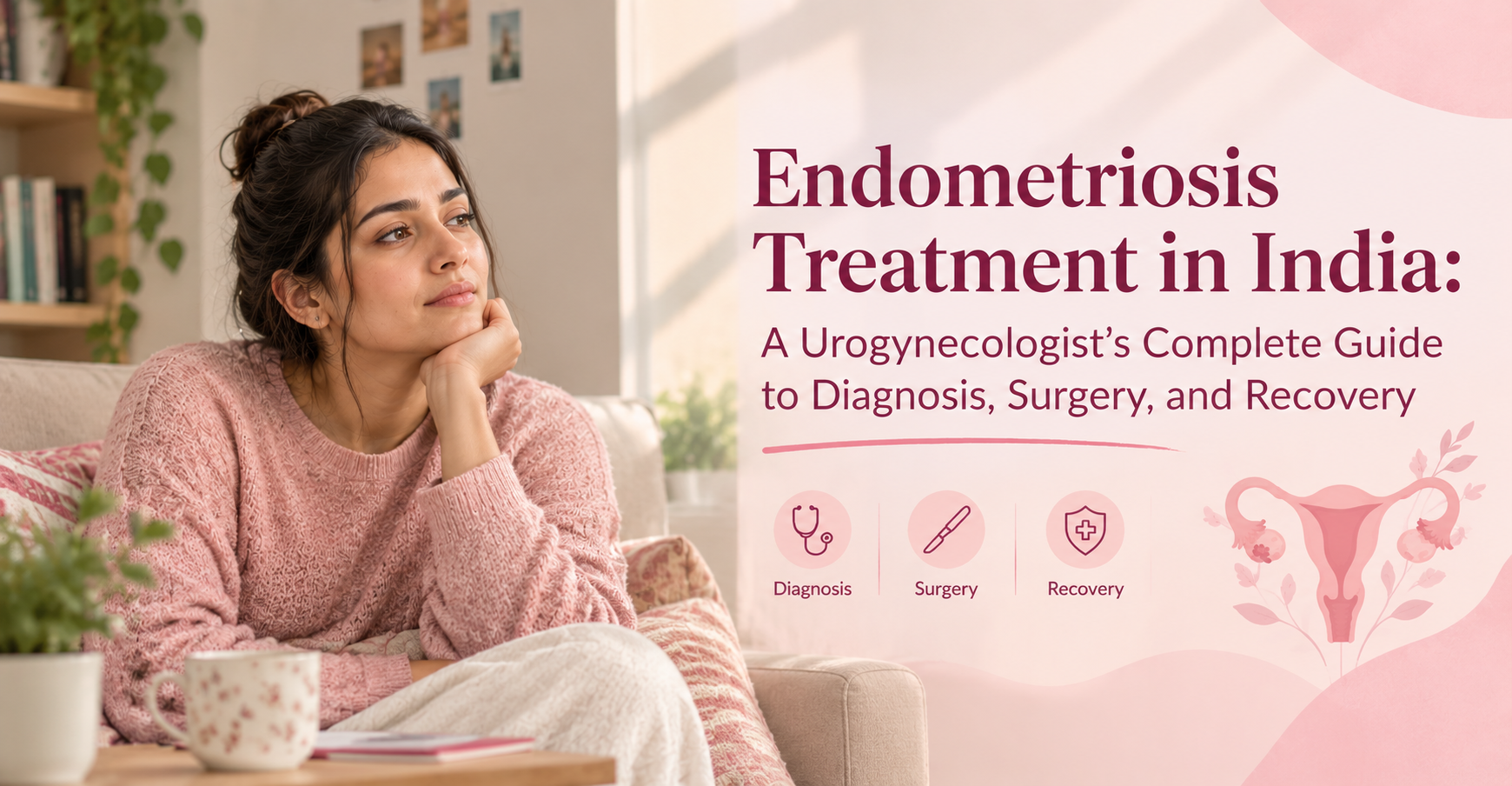
Endometriosis Treatment in India: A Urogynecologist’s Complete Guide to Diagnosis, Surgery, and Recovery
If your period pain has ever made you miss school, cancel plans, skip work, or spend hours curled up in bed, you’re not alone. Around 1 in 10 women of reproductive age worldwide live with endometriosis, yet many wait years for the right diagnosis. In India, the average delay is estimated to be 7–9 years, leaving many women struggling with symptoms that disrupt daily life.
Finding the right endometriosis treatment starts with recognizing that persistent pelvic pain is not something you have to live with. Too often, women are told that painful periods are “normal” or that the pain will improve after marriage or childbirth. These misconceptions can delay proper diagnosis and treatment.
This guide explains the symptoms of endometriosis, how it is diagnosed, available treatment options, when surgery may be recommended, and its possible impact on fertility, helping you make informed decisions about your health.
What Is Endometriosis? Understanding the Condition
Endometriosis is a chronic condition in which tissue similar to the uterine lining grows outside the uterus. These growths can develop on the ovaries, fallopian tubes, bladder, bowel, and other pelvic organs, leading to inflammation, scarring, & adhesions.
Although this tissue is outside the uterus, it still responds to hormonal changes during the menstrual cycle. This often causes recurring pain, especially during periods. However, symptom severity does not always reflect the extent of the disease, some women with mild endometriosis experience severe pain, while others with advanced disease have few symptoms.
According to the World Health Organization, endometriosis affects around 190 million women worldwide, making it one of the most common yet underdiagnosed gynaecological conditions.
More than just painful periods, endometriosis can affect physical health, emotional well-being, work, relationships, and fertility. Fortunately, a range of treatment options, from medication and pain management to minimally invasive surgery, can help manage symptoms and improve quality of life.
Endometriosis Symptoms Every Woman Should Know
Endometriosis affects every woman differently. Some experience severe pain every month, while others have mild symptoms or none at all. The intensity of symptoms does not always match the severity of the disease, which is one reason many women remain undiagnosed for years.
Common endometriosis symptoms include
- Severe menstrual cramps that worsen over time
- Chronic pelvic pain, even between periods
- Pain during or after sexual intercourse
- Heavy menstrual bleeding or bleeding between periods
- Pain during bowel movements or urination, especially during menstruation
- Bloating, nausea, constipation, or diarrhea around periods
- Persistent fatigue
- Difficulty conceiving or infertility
Some women also experience lower back pain, bladder discomfort, or digestive symptoms that resemble irritable bowel syndrome (IBS). Because these symptoms overlap with other conditions, endometriosis is often mistaken for something else, delaying the correct diagnosis.
If these symptoms repeatedly interfere with your work, studies, relationships, or everyday activities, they should not be ignored. Seeking medical evaluation early can help identify the cause and guide appropriate treatment.
Severe Period Pain—When It Is More Than Just Cramps
Many women are told that painful periods are simply part of life. While mild menstrual cramps are common, pain that regularly forces you to miss work, college, or social activities, or rely on strong painkillers, is not normal.
Typical menstrual cramps usually—
- Improve with over-the-counter pain medication
- Last for one or two days
- Do not significantly disrupt daily life
Pain caused by endometriosis often—
- Begins before your period and may continue afterwards
- Worsens over time
- Occurs during sexual intercourse, bowel movements, or urination
- Is accompanied by chronic pelvic pain between periods
Seeking severe period pain treatment early can help identify the underlying cause, whether it’s endometriosis, adenomyosis, fibroids, or another pelvic condition. Early diagnosis can reduce unnecessary suffering and help you access the right treatment sooner.
Learn more about painful periods and dysmenorrhea and when menstrual pain may require specialist evaluation.
How Endometriosis Affects Fertility?
Not every woman with endometriosis experiences fertility problems, and many conceive naturally. However, there is a well-established link between endometriosis and infertility, especially in moderate to severe cases. Studies suggest that 30% to 50% of women with infertility have endometriosis.
Endometriosis may affect fertility by causing—
- Inflammation in the reproductive organs
- Scar tissue (adhesions)
- Ovarian endometriomas
- Blocked or distorted fallopian tubes
- Changes that interfere with fertilization or implantation
Most importantly, a diagnosis of endometriosis does not automatically mean infertility. Every woman’s experience is different, and treatment should be tailored to her symptoms, reproductive goals, and overall health.
Women trying to conceive may also benefit from a comprehensive female infertility workup to identify all possible factors affecting fertility.
Diagnosing Endometriosis—Tests and Scans
One of the biggest challenges with endometriosis is the delay in diagnosis. Because symptoms such as pelvic pain, heavy periods, and digestive problems can resemble conditions like irritable bowel syndrome (IBS), pelvic inflammatory disease (PID), or adenomyosis, many women spend years searching for answers.
Diagnosis usually begins with a discussion about your symptoms and medical history. Your doctor may ask about—
- When your pain began
- Whether symptoms occur only during periods or throughout the month
- Pain during intercourse, bowel movements, or urination
- Heavy menstrual bleeding
- Fertility concerns
- Previous surgeries or treatments
A pelvic examination may also be performed to check for tenderness or other abnormalities.
Pelvic Ultrasound
A transvaginal ultrasound is often the first imaging test recommended. It can identify ovarian endometriomas (endometriosis cysts) and may detect deep endometriosis involving nearby pelvic organs. However, a normal ultrasound does not rule out endometriosis, particularly superficial disease.
MRI Scan
If deep infiltrating endometriosis is suspected, especially when the bowel, bladder, or ureters may be involved, your doctor may recommend an MRI scan. MRI provides detailed images that help assess the extent of disease and assist in surgical planning when needed.
Is Laparoscopy Still the Gold Standard?
For many years, diagnostic laparoscopy was considered the gold standard because it allows surgeons to directly visualize endometriosis and, when appropriate, remove tissue for confirmation. Today, advances in imaging mean that many women can begin treatment based on their symptoms and imaging findings without undergoing surgery solely to establish a diagnosis. Laparoscopy is generally reserved for situations where imaging is inconclusive, symptoms are severe, or surgery is already being considered as part of treatment.
The most important message is simple—if your symptoms are affecting your daily life, don’t wait years hoping they’ll disappear. Early evaluation often leads to earlier treatment and a better quality of life.
Endometriosis Treatment Options: Medical vs. Surgical
There is no one-size-fits-all endometriosis treatment. The best approach depends on your symptoms, the extent of the disease, fertility goals, and overall health. The aim is to relieve pain and improve quality of life.
Medical Management
Women with mild to moderate symptoms may benefit from—
- Pain-relieving medicines (NSAIDs)
- Hormonal contraceptives
- Progestin-based therapies
- Hormonal IUDs
- GnRH-based medications in selected cases
These treatments can help control symptoms but do not cure endometriosis, and symptoms may return after treatment is stopped.
When Is Surgery Recommended?
Surgery may be considered if—
- Pain persists despite medication
- Large endometriomas are present
- Endometriosis affects the bladder, bowel, or other organs
- Fertility is affected in selected cases
- Imaging shows extensive disease
The goal of surgery is to remove endometriosis while preserving healthy tissue. However, surgery isn’t necessary for everyone. Many women do well with medication alone, while others benefit from a combination of medical therapy, surgery, and ongoing follow-up.
For additional patient information, the American College of Obstetricians and Gynecologists (ACOG) offers guidance on endometriosis symptoms & treatment options.
Endometriosis Surgery—What Happens During the Procedure?
When medication doesn’t provide enough relief, or when endometriosis affects nearby organs or fertility in selected cases, endometriosis surgery may be recommended. The goal is to remove endometriosis lesions while preserving as much healthy tissue as possible, helping reduce pain and improve pelvic function.
Laparoscopic Endometriosis Surgery
Laparoscopic surgery is the standard minimally invasive approach. Using a few small incisions, the surgeon removes endometriosis lesions, scar tissue, or ovarian endometriomas with the help of a camera and specialized instruments.
Its benefits may include
- Smaller incisions
- Less postoperative pain
- Shorter hospital stay
- Faster recovery
- Better visualization of pelvic organs
When Is Robotic Surgery Considered?
For complex or deeply infiltrating endometriosis involving the bladder, bowel, ureters, or pelvic nerves, robotic-assisted surgery may be recommended in selected cases. It provides enhanced precision & 3D visualization for complex procedures.
The choice between robotic and laparoscopic endometriosis surgery hinges on the extent of the disease, the patient’s individual needs, & the surgeon’s expertise, not simply the technology available.
Choosing an Endometriosis Specialist in India
Finding the right endometriosis specialist is an important part of effective long-term care. When seeking endometriosis treatment in India, look for a doctor who—
- Has experience treating both mild and complex endometriosis
- Is trained in advanced laparoscopic and robotic surgery
- Offers personalized treatment based on your symptoms and goals
- Works with other specialists when multidisciplinary care is needed
Above all, choose a doctor who listens. Many women with endometriosis spend years feeling unheard, & compassionate, patient-centered care can make a significant difference throughout the treatment journey.
Pelvic Pain Treatment Beyond Endometriosis
Although endometriosis is a common cause of chronic pelvic pain, it isn’t the only one. Similar symptoms can also be caused by—
- Adenomyosis
- Pelvic inflammatory disease (PID)
- Interstitial cystitis (painful bladder syndrome)
- Pelvic adhesions
- Irritable bowel syndrome (IBS)
- Pelvic floor muscle dysfunction
- Ovarian cysts or fibroids
This is why effective chronic pelvic pain management begins with an accurate diagnosis. Some women may even have more than one condition, such as both adenomyosis and endometriosis.
Recovery Timeline After Endometriosis Surgery
Recovery varies depending on the extent of surgery and your overall health, but most women gradually return to their normal routine over several weeks.
- First 24 Hours—Gentle walking is encouraged as soon as it is safe to support circulation and recovery.
- First Week—Mild pain, fatigue, and bloating are common and usually improve with rest and prescribed medication.
- Two to Four Weeks—Many women can return to desk-based work and light daily activities, depending on their recovery.
- Around Six Weeks—Most patients resume normal activities, although recovery may take longer after complex surgery involving the bladder or bowel.
Regular follow-up remains important, as endometriosis is a chronic condition and some women may benefit from ongoing medical management to reduce the risk of symptom recurrence.
Book a consultation with Dr. Indira Sarin at Urja Medicenter, Jaipur, to discuss diagnosis, treatment options, and next steps for your case. WhatsApp: +91 77259 24746.
FAQs
Q1. Can endometriosis be cured completely?
A1. Endometriosis cannot be fully cured, but it can be effectively managed. Surgical removal of endometrial tissue combined with medical management can significantly reduce symptoms and improve quality of life for years. Regular follow-up with a specialist is important because recurrence is possible.
Q2. Does endometriosis always cause infertility?
A2. No. Roughly 30-50% of women with endometriosis experience fertility challenges, which means half do not. Many women with endometriosis conceive naturally. For those who struggle, surgical treatment and assisted reproduction can significantly improve chances.
Q3. What is the best treatment for endometriosis in India?
A3. The best treatment depends on the severity of the disease, your symptoms, and whether you want to preserve fertility. Options range from hormonal therapy to laparoscopic and robotic surgery. A urogynecologist or endometriosis specialist will design a plan specific to your case.
Q4. How do I know if my period pain is normal or endometriosis?
A4. Normal period pain is manageable with over-the-counter painkillers and does not disrupt daily life. If your pain forces you to miss work, cancel plans, or take strong medication every month, it may not be normal. Painful intercourse, chronic pelvic pain, or heavy bleeding alongside period pain are red flags worth investigating.
Q5. Is robotic surgery better than laparoscopic surgery for endometriosis?
A5. For deep infiltrating endometriosis or endometriosis involving the bladder, bowel, or ureter, robotic surgery offers superior precision because of 10x magnification and wristed instruments. For mild to moderate endometriosis, laparoscopy is equally effective. Your surgeon should recommend the approach based on your case, not the technology available.
Q6. Can endometriosis come back after surgery?
A6. Yes. Recurrence rates range from 10% to 40% depending on the severity of the disease at the first surgery and whether hormonal suppression is used afterward. Regular follow-up and long-term management significantly reduce recurrence risk.
Q7. How much does endometriosis treatment cost in India?
A7. Costs vary widely depending on the approach, medical management, laparoscopic surgery, or robotic surgery, and the complexity of the case. India remains significantly more affordable than the US, UK, or Australia for the same quality of care. A specialist consultation will give you an accurate estimate.