Vesicovaginal Fistula Treatment—Complete Guide to VVF Repair Surgery and Recovery
If you have been quietly living with continuous urine leakage through the vagina, you may have felt too embarrassed or unsure to seek help. The good news is that vesicovaginal fistula treatment is available, and most women can be successfully treated. When the first repair is performed by an experienced specialist, reported success rates are approximately 85–95%. This guide explains what a vesicovaginal fistula is, why it happens, how it is diagnosed, and the treatment options available so you can make informed decisions with confidence.
What is a vesicovaginal fistula (VVF)?
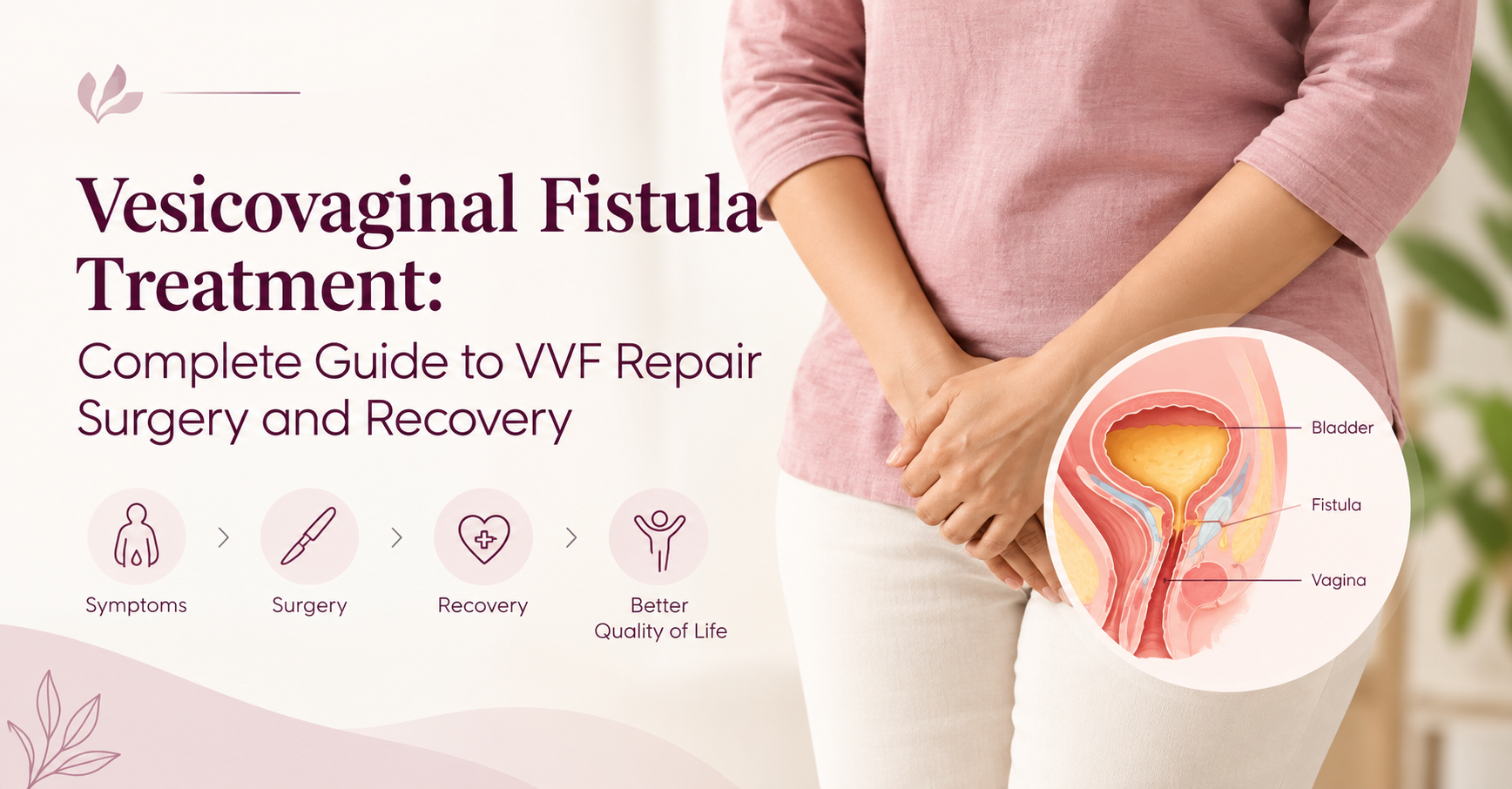
A vesicovaginal fistula (VVF) is an abnormal opening between the bladder and the vagina. Because of this connection, urine continuously leaks from the bladder into the vagina instead of being stored normally.
Seeking timely vesicovaginal fistula treatment is important because the condition does not usually improve on its own. Fortunately, with the right diagnosis and treatment, most women can regain normal bladder control and return to their daily activities.
Patients looking for additional educational resources can also refer to the International Urogynecological Association (IUGA) patient information on vesicovaginal fistula.
See this genitourinary fistula overview and understand the different types. This can help patients better understand their diagnosis.
Urine Leakage Through Vagina—The Main VVF Symptom
The most common symptom of VVF is continuous urine leakage through the vagina. Unlike ordinary urinary incontinence, the leakage is usually constant and may continue day and night, even when you are not trying to pass urine.
Other symptoms may include-
- Constant wetness despite emptying the bladder
- Recurrent urinary tract infections
- Irritation around the genital area
- Difficulty participating in normal daily activities
Many women initially think they simply have urinary incontinence. Yet, continuous leakage following childbirth or pelvic surgery should always be evaluated by a specialist.
Although VVF differs from ordinary incontinence, understanding urinary incontinence treatment can help explain how these conditions are diagnosed and managed differently.
What Causes Vesicovaginal Fistula in India?
Were you looking for VVF treatment? Then read this! In India, VVF most commonly develops after prolonged obstructed labor. According to the World Health Organization (WHO), prolonged obstructed labor remains one of the leading causes of obstetric fistula in many low-resource settings. Prolonged obstructed labor or as a complication following pelvic surgery, particularly hysterectomy.
Less common causes include radiation therapy, severe pelvic infections, trauma, or repeat pelvic operations.
Normal causes are
- Prolonged obstructed labor
- Hysterectomy or other pelvic surgery
- Radiation therapy for pelvic cancers
- Severe pelvic infection
- Pelvic trauma
The underlying cause helps determine the most appropriate VVF treatment and the best surgical approach for repair.
How Vesicovaginal Fistula is Diagnosed
Although living with VVF can be distressing, diagnosis is usually straightforward once you reach a vesicovaginal fistula specialist.
Your evaluation may include-
- A detailed medical history
- Pelvic examination
- Dye test to identify the fistula
- Cystoscopy to examine the bladder
- Imaging studies when needed
These tests help determine the location, size, and complexity of the fistula so that the most appropriate treatment plan can be developed.
VVF Repair Surgery—Approaches and Techniques
For most women, VVF repair surgery offers the best chance of permanently correcting the problem.
Depending on the location and complexity of the fistula, surgery may be performed through—
- The vagina (vaginal repair)
- The abdomen (open surgery)
- Laparoscopic (keyhole) surgery
- Robotic-assisted minimally invasive surgery
The choice of procedure depends on several factors, including the size and location of the fistula, previous surgeries, surrounding tissue health, and the surgeon’s experience. The goal is always the same—to close the abnormal opening while preserving normal bladder function.
Learn more about laparoscopic UVF and VVF repair and when minimally invasive surgery may be appropriate.
Vesicovaginal Fistula Surgery—Laparoscopic vs Robotic vs Open
Several surgical approaches are available. But no single technique is suitable for every patient.
Laparoscopic Surgery
Laparoscopic surgery uses small incisions and specialized instruments. It is associated with less postoperative pain, smaller scars, shorter hospital stays, and faster recovery compared with traditional open surgery.
Robotic Surgery
Robotic-assisted surgery offers enhanced precision and three-dimensional visualization, making it particularly useful in selected complex cases requiring delicate reconstruction.
Open Surgery
Open surgery may still be recommended for certain complex or recurrent fistulae where minimally invasive surgery may not be the most appropriate option.
The best approach depends on your individual condition rather than the technology alone.
Learn more about robotic pelvic reconstructive surgery and its role in treating complex pelvic conditions.
Recovery After VVF Repair Surgery
Recovery after fistula repair surgery depends on the fistula’s complexity, the type of surgery performed, and your overall health. While every woman’s recovery is different, following your surgeon’s advice plays an important role in successful healing.
Your surgeon usually keeps a urinary catheter in place for a period they recommend to allow the repaired bladder to heal properly. During recovery, you may also be advised to—
- Avoid heavy lifting and strenuous activity
- Drink adequate fluids
- Complete all prescribed medications
- Attend scheduled follow-up appointments
- Avoid sexual intercourse until your doctor confirms healing
Most women gradually return to their normal routine over the following weeks, although recovery may take longer after complex repairs.
Finding a Vesicovaginal Fistula Specialist in India
VVF repair is a specialized procedure that requires expertise in reconstructive pelvic surgery. Choosing an experienced vesicovaginal fistula specialist can improve surgical planning and outcomes.
When selecting a specialist, consider someone who-
- Has experience managing simple and complex VVF cases
- Performs advanced laparoscopic and robotic reconstructive surgery
- Offers an individualized treatment plan
- Works with a multidisciplinary team when needed
- Provides long-term follow-up after surgery
Women with recurrent fistulae, previous failed repairs, or radiation-related fistulae may particularly benefit from treatment at centers experienced in complex pelvic reconstruction.
Urinary Fistula Treatment- Beyond VVF
Although VVF is the most common urinary fistula, other types can also cause continuous urine leakage.
These include
- Ureterovaginal fistula (UVF)—an abnormal connection between the ureter and the vagina
- Combined urinary fistulae involving more than one part of the urinary tract
Because symptoms can be similar, accurate diagnosis is essential before treatment begins. The appropriate urinary fistula treatment depends on the type, location, cause, and complexity of the fistula.
You Are Not Alone—The Emotional Reality of VVF
Living with continuous urine leakage can affect far more than physical health. Many women feel embarrassed, anxious, or isolated, avoiding work, travel, social gatherings, or even close relationships because of the constant fear of leakage and odor.
It is important to remember that vesicovaginal fistula is a medical condition. It is not something to be ashamed of. With an on-time checkup & appropriate treatment, many women regain continence & return to an active, confident life.
Organizations such as the Fistula Foundation also provide educational resources and raise awareness about fistula and the importance of timely treatment.
Seeking help is often the first and most important step toward recovery.
When to Seek Medical Attention?
You should consult a specialist if you notice—
- Continuous urine leakage through the vagina
- Leakage after childbirth or pelvic surgery
- Recurrent urinary tract infections
- Persistent wetness despite emptying your bladder
- Symptoms affecting your daily activities or quality of life
Early diagnosis often allows timely treatment and helps prevent ongoing physical and emotional distress.
Conclusion
A diagnosis of vesicovaginal fistula can feel overwhelming, but it is a treatable condition. Modern vesicovaginal fistula treatment, including advanced laparoscopic and robotic reconstructive surgery, offers excellent outcomes for many women.
If you have persistent urine leakage through the vagina, don’t ignore your symptoms or assume you have to live with them. A consultation with an experienced urogynecologist can help determine the cause and recommend the most appropriate treatment for your individual situation.
As Dr. Indira Sarin believes, restoring health is not only about surgical skill but also about treating every woman with compassion, dignity, and hope.
If you have been living with continuous urine leakage and have been too embarrassed or exhausted to seek help, please reach out. VVF is treatable, and Dr. Indira Sarin has performed vesicovaginal fistula repair for women from across Rajasthan and neighboring states. WhatsApp +91 77259 24746 in confidence, or book a private consultation.
FAQs
Q1. Can VVF be cured completely?
A1. Yes. VVF is curable in the vast majority of cases. First-time repair by an experienced specialist has a success rate of 85 to 95 percent. Even in complex or recurrent cases, most women achieve full continence after appropriate surgery.
Q2. How long does VVF repair surgery take?
A2. The surgery itself typically takes 90 minutes to 3 hours depending on the location, size, and complexity of the fistula. Recovery in the hospital is usually 2 to 5 days, followed by catheter care at home for 2 to 3 weeks.
Q3. Is VVF caused only by childbirth?
A3. No. In India, VVF is commonly caused by prolonged obstructed labor, but it can also result from complications of hysterectomy or other pelvic surgery, radiation therapy for cancer, severe infection, or trauma. The cause affects the type of surgery needed.
Q4. Can VVF heal on its own?
A4. Very small fistulas (under a few millimeters) may occasionally close spontaneously with prolonged catheter drainage, but this is uncommon. Most VVFs require surgical repair. Waiting rarely helps and can allow the surrounding tissue to become more inflamed.
Q5. How soon after diagnosis should VVF surgery be done?
A5. For obstetric fistulae, surgery is usually planned 8 to 12 weeks after delivery to allow tissue to heal and inflammation to settle. For post-surgical fistulae, timing depends on the individual case—sometimes early repair, sometimes waiting 3 months. Your specialist will guide the timing.
Q6. Will I be able to have children after VVF repair?
A6. Yes, in most cases. Fertility is usually preserved after VVF repair. Future pregnancies should be managed carefully, often with planned cesarean delivery, to avoid stress on the repaired area.
Q7. Is laparoscopic or robotic VVF repair better than open surgery?
A7. For most cases, laparoscopic and robotic approaches offer smaller incisions, less pain, faster recovery, and equal success rates compared to open surgery. However, some complex or high-fistula cases may still be better managed with an open or vaginal approach. The best route depends on your specific case and your surgeon’s experience.