Pelvic Organ Prolapse: Signs, Stages & Treatment Options in India
Pelvic organ prolapse is much more prevalent than women think, and it is one of the least discussed conditions. In all my years in practice, I’ve seen a lot of women who are continually taking their pain in silence, believing it is part of ageing or a direct result of giving birth. I want you to know that it’s NOT something you have to live with. A correct diagnosis and the proper approach mean that pelvic organ prolapse treatment in India is very effective and sometimes life-changing.
What Is Pelvic Organ Prolapse?
Pelvic organ prolapse is the downward displacement of the pelvic organs.
Definition — what “prolapse” actually means
Let’s start with the definition of “prolapse”. With pelvic organ prolapse, the pelvic organ-supporting muscles and tissues lose strength, which causes a pelvic organ to fall into or out of the vagina.
Which organs can prolapse?
Imagine the pelvic floor is like a hammock. If it slackens or extends, the organs that it sustains start to sink lower.
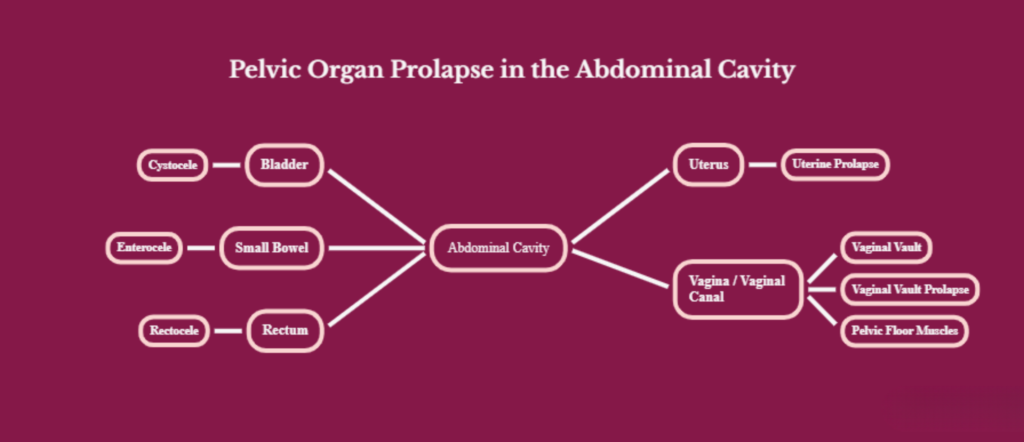
Certain organs may be prone to prolapse.
- Cystocele (bladder): refers to urinary symptoms that occur.
- Rectum (Rectocele): makes passing stools hard.
- Uterus (uterine prolapse): the uterus falls into the vagina.
- Vault prolapse is seen after the hysterectomy is performed.
- Enterocele (small bowel): Probably less common, but significant in the small bowel.
How common is prolapse in Indian women?
Research and clinical practice show that 1 out of 3 women will develop some degree of prolapse at some time in their lives after giving birth. However, many don’t ask for assistance.
What Causes Pelvic Organ Prolapse?
Pelvic organ prolapse can be caused by a variety of factors.
Childbirth
The pelvic support structures may be weakened and stretched by vaginal delivery, particularly if it is a multiple birth or if the baby is large or the birth is difficult.
Chronic Straining
Prolonged constipation or strenuous activity can put pressure on the pelvic floor.
Menopause
After menopause, tissues are weakened by the loss of oestrogen, thus increasing the risk of prolapse.
Hysterectomy
Sometimes, after having the uterus removed, there’s a change in the way the pelvis supports the body.
Connective Tissue Disorders
There are actually some women who have naturally weaker supporting tissues.
Obesity and its pressure on the pelvic floor
The overburden on pelvic structures is constant with excess weight.
Symptoms of Pelvic Organ Prolapse—What Women Actually Feel?
It’s often hard for women to articulate when they have pelvic organ prolapse symptoms, but once you hear them, they may sound familiar.
Common Symptoms
- A sense of “heaviness or dragging” in the pelvis
- A bulge or something falling in the vagina.
- Difficulty with starting urination, or sensation of not emptying fully
- Increased urination or urgency to urinate, or leakage of urine
- Trouble passing stools or straining to pass stools
- Lower back pain or pain in the pelvis.
- Relief of sensation or discomfort during sex
- Symptoms are worse by evening or from standing for long periods of time.
This is often the moment in consultation when women say, “Yes, this is exactly what I’ve been feeling.”
Stages of Pelvic Organ Prolapse — The POP-Q Grading System
The POP-Q system describes the various stages of pelvic organ prolapse.
Stage 0 — No prolapse
In this phase, it is determined that there is no prolapse. The pelvic floor supports well, so a woman would not experience any problems.
Stage I — Minor descent, no symptoms
In this phase, there is also a prolapse. Women experience no symptoms and don’t require any treatment.
Stage II — At or near the vaginal opening
At this phase, the prolapsed organ gets very close to the vaginal opening, while women start to experience some degree of heaviness and discomfort during daily activities.
Stage III — Beyond the vaginal opening
At this stage, the protruding organ becomes visible outside of the vaginal opening. This causes a significant feeling of discomfort and various other symptoms affecting quality of life.
Stage IV — Complete prolapse (procidentia)
At this stage, the symptoms are very severe, making it necessary to seek surgical assistance.
Why does staging matter for treatment decisions?
There’s no single treatment that fits all. Conservative management is often appropriate in the early stages, and more advanced stages may require surgical correction.
How Is Pelvic Organ Prolapse Diagnosed?
Pelvic Examination
The type and prolapse stages are assessed by a simple clinical examination.
Urodynamics Testing
Assesses bladder function, particularly if there is urinary symptomology.
Ultrasound and MRI in complex cases
Used in complicated situations.
Self-assessment — how to check at home (and its limitations)
Some women will notice a bulge, but self-diagnosis is not as good as a diagnosis by a doctor when it comes to the treatment or severity of the condition.
Non-Surgical Treatment Options for Prolapse
There are a variety of non-surgical treatment options for prolapse. A big misconception is that surgery is the only means of relief. That’s not true.
Pelvic Floor Physiotherapy
This is usually the initial line of treatment in early stages. Symptoms can be greatly enhanced with strengthening exercises.
Pessary Devices
A small appliance that’s used in the vagina to help support the organs is called a pessary. It’s ideal for women who don’t want to have surgery or for those who want to delay surgery.
Lifestyle Changes
- Managing weight
- Treating constipation
- Avoiding heavy lifting
Hormone replacement therapy for post-menopausal prolapse
Local oestrogen may help to strengthen tissues in post-menopausal women.
Who is non-surgical treatment most suitable for?
For women who have mild to moderate prolapse, women who are looking to become pregnant, or women who do not want to have any surgical procedure performed.
Surgical Treatment Options for Pelvic Organ Prolapse
Pelvic organ prolapse can be treated surgically. If symptoms seriously interfere with life, surgery might be the optimal treatment.
Vaginal Repair (Colporrhaphy)
Medically used for the vaginal repair of bladder prolapse in women or rectal prolapse.
Sacrocolpopexy — Gold Standard
An excellent procedure, particularly for the prolapse of the vagina.
Robotic sacrocolpopexy — Dr Sarin’s speciality
My area of specialisation is robotic sacrocolpopexy. I work in the area of robotic sacrocolpopexy.
This is a less invasive solution that provides:
- Smaller incisions
- Faster recovery
- Excellent long-term outcomes
Hysterectomy combined with prolapse repair
In some situations where it is required, a uterus can be removed together with pelvic support structures, leading to long-term relief.
Mesh vs. no mesh — current guidelines in India
Current guidelines in India permit the use of mesh in selective cases such as vault prolapse; however, in many cases, repairs can be performed with local tissue because of safety and client considerations.
Recovery timeline after prolapse surgery
Most women recover in 4–6 weeks; return to normal activity takes time, and adequate avoidance of weight lifting is necessary for full recovery.
Surgery | Best For | Approach | Recovery | Recurrence Rate |
Vaginal repair | Mild–moderate prolapse | Vaginal | 4–6 weeks | Moderate |
Sacrocolpopexy | Vault prolapse | Abdominal/robotic | 2–4 weeks | Low |
Robotic sacrocolpopexy | Advanced cases | Minimally invasive | Faster recovery | Very low |
Hysterectomy + repair | Uterine prolapse treatment | Combined | 4–6 weeks | Low |
Life After Prolapse Treatment
What to expect in recovery
For most women, the procedure has little impact on their normal activities, and she returns to normal within weeks.
Long-Term Prevention
- Regular workouts to tighten the pelvic floor.
- Avoiding strain
- Maintaining a healthy weight
Can prolapse come back after surgery?
Yes, but if you have the right treatment and lifestyle care, it is unlikely to return.
Sex life after prolapse repair
Treatment tends to make most women more comfortable and confident.
FAQs
Q1. Can pelvic organ prolapse be cured without surgery?
Yes, particularly in the early stages, by using physiotherapy and pessaries.
Q2. Is prolapse surgery safe for older women?
Yes, in most instances, after proper evaluation.
Q3. What is the best surgery for uterine prolapse?
Depends on the age, severity, and future fertility plans.
Q4. Does prolapse affect fertility?
Although most prolapses are mild and do not need to be managed, some are severe and do need treatment.
Q5. Can I exercise with a prolapse?
Yes, but not with high impact, and make sure that it’s an exercise that’s safe for the pelvis.
Final Words
Pelvic organ prolapse affects many women—however, there is no need to keep quiet about it. An important step in getting better is to recognise your symptoms and seek help sooner rather than later. From simple physiotherapy to sophisticated robotic surgery, there are solutions to suit your needs.
“Prolapse is highly treatable at every stage. Book an assessment with Dr Indira Sarin to understand which option is right for you.”