In my clinic, I’ve seen two or three women say the same thing to me every week: “Doctor, my periods finish, but the brown spotting just continues.” Some of them have been living like this for two, three, or five years. They have changed their sanitary pads many times; they have stopped wearing white clothes, and they believe that having brown spotting after C-sections is “normal.” Most of the time, the explanation of this shock is some inflammation in the cesarean scar, known as an isthmocele or a small defect in the scar, which is treatable.
As one of the few experts in India who deal with the issue that has been having an effect on women for a long time, my goal for this blog is to let you know what the signs and symptoms are, most importantly, what you can do about it, so you never have to suffer through years of unexplained spotting again.
What Is an Isthmocele?
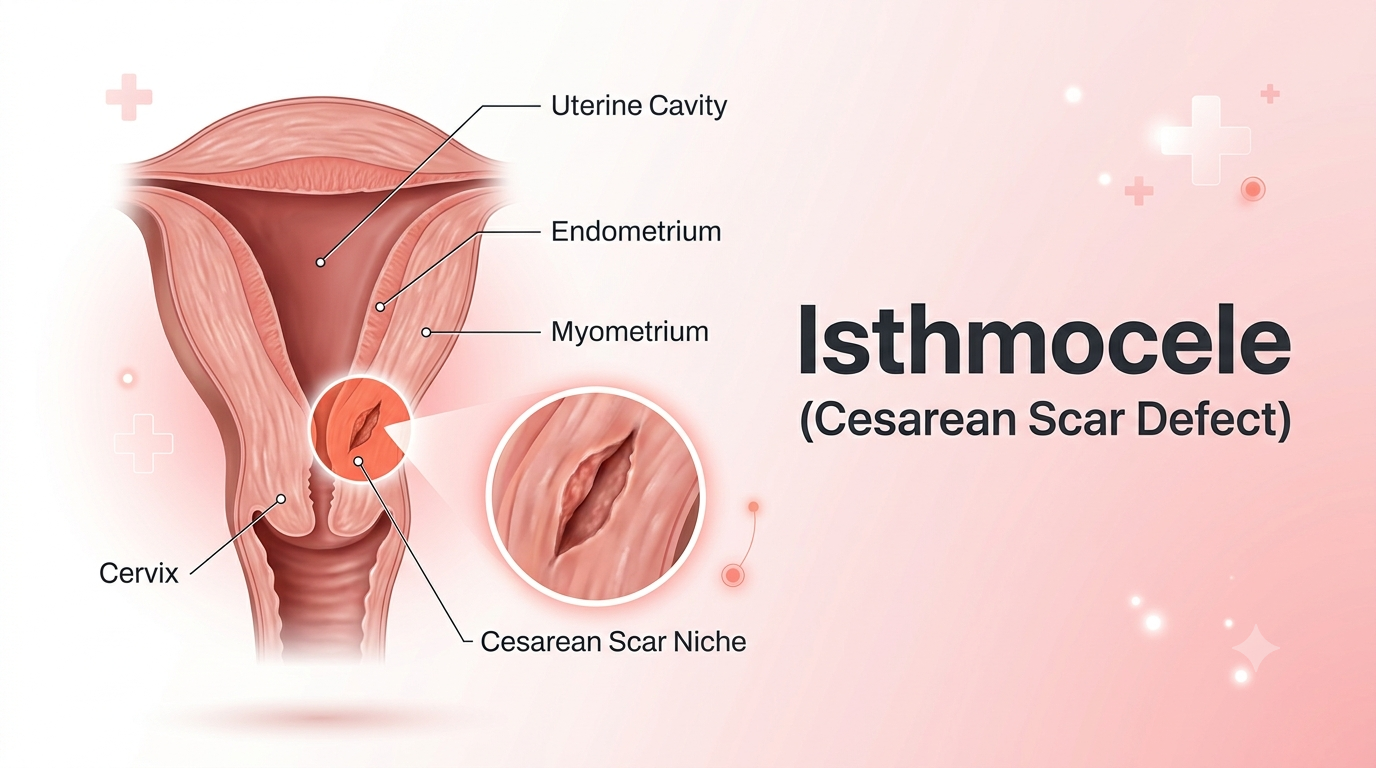
An isthmocele is a tiny pocket or abnormality in the uterus where a previous cesarean section scar is created. This area does not heal fully, and a space forms where the menstrual blood can accumulate. In short, it’s a “dent” in the wall of your uterus where your C-section scar was cut.
The medical definition in plain language
An isthmocele is a cesarean scar defect, which is caused by thinning or an indentation in the uterine muscle at the scar site, and which can disrupt normal uterine function.
Is it common to have an isthmocele after a C-section?
As a result of the increasing trend of cesarean sections in India, isthmocele is increasingly being seen more than previously thought. Some women may develop isthmocele symptoms of a scar defect, and studies indicate that up to 50-60% of women may have some scar defect.
Is it the same as a cesarean scar defect or niche?
Yes. The terms niche, scar defect, or uterine pouch are all used to describe the same condition.
What Causes an Isthmocele to Form?
This is one of the most common questions that is asked by a lot of people whenever they find themselves in the situation that I find myself in. A common question is always asked, “Why did this happen to me?” The reality is that there are surgical, anatomical, and healing factors that all play a role in isthmocele formation.
How the C-section scar creates a weak spot
At the time of a cesarean section, an incision is made in the bottom of the uterus. This forms a good, smooth wall ideally. But sometimes the healing is not complete, and a thin area or an indentation will remain. This area may become weak and retain menstrual blood build-up, causing symptoms.
Risk factors that increase your chances
- Number of previous C-sections: The higher the number of C-sections you’ve had, the greater the risk of scar weakness.
- Uterine position (retroverted uterus): If the uterus is tilted in the opposite direction, it may increase the tension on the scar and thus impair the healing.
- Surgical technique used: Various methods of suturing in surgery may affect healing of the scar.
- Healing complications: Contributing factors include infections, not good healing, or physical stress early in the post-operative period.
Why some women develop it, and others don’t
The cause of some women developing the condition and others not is still unknown.
It is the place of medicine and individuality. Two women may do well with the same surgery, but heal very differently. It involves a response of your body to healing, quality of your tissues, and even your hormonal balance.
Symptoms of Isthmocele — What to Watch For
Symptoms vary quite a bit from woman to woman, and some women have no symptoms at all. Here’s the checklist I actually use with my own patients during a first consultation:
Post-menstrual brown spotting (the #1 warning sign)
The first warning sign of a woman who is going to have the condition is post-menstrual brown spotting. It’s the most typical symptom. Brown discharge for several days may be noticed after the end of your period. This is because the blood remains in the scar pouch and gradually leaks out.
Pelvic pain or pressure
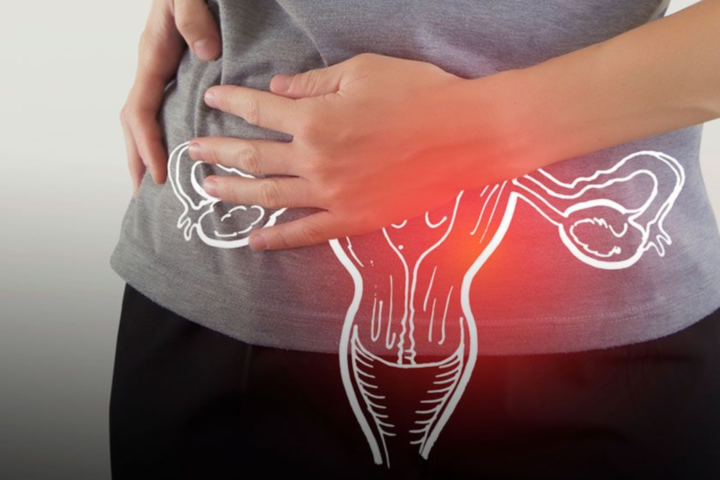
A feeling of pain or pressure in the pelvis. A constant, mild abdominal pain, particularly after periods, may be associated with the defect.
Subfertility or difficulty conceiving after C-section
If you are having trouble conceiving or are subfertile after a cesarean section. An isthmocele can cause blockage of sperm transport or embryo implantation, which can be a problem in achieving pregnancy.
Intermenstrual bleeding
Unaware bleeding between periods may be caused by the irregular discharge of menstrual blood. If no symptoms, the isthmocele is silent (asymptomatic isthmocele).
When symptoms are silent (asymptomatic isthmocele)
Some isthmoceles are picked up incidentally, on a routine ultrasound, in women who have no complaints whatsoever. In these cases, we don’t automatically operate; rather, size, symptoms, and your future pregnancy plans decide whether treatment is needed at all.
How Is Isthmocele Diagnosed?
Diagnosis starts with a diagnosis. After correctly diagnosing the problem, we can customize the treatment to meet your needs.
Transvaginal ultrasound (TVS) — first-line investigation
Transvaginal ultrasound (TVS) is the first-line investigation to use. The first-line investigation to use is transvaginal ultrasound (TVS). This is typically the initial step. This will allow us to visualize the scar area and find out if there is any indentation or fluid accumulation.
Saline infusion sonography (SIS)
In this technique, sterile saline is added to the uterus with the ultrasound, making the defect easier to see.
Hysteroscopy — gold standard for diagnosis
Hysteroscopy is the definitive test for making a diagnosis. It is a minimally invasive procedure, in which a small camera is placed into the uterus. It enables the visualisation of the scar defect directly.
MRI in complex cases
MRI provides an excellent, detailed picture of the structure of the uterus for larger and more complex defects.
What measurements define a “significant” defect
Determine the depth of the niche and the thickness of the uterine wall. This helps to identify the need for treatment and the most appropriate treatment.
Isthmocoele Treatment Options — Which Is Right for You?
Not all isthmocele are surgically treatable. This is based on your symptoms, fertility desires, and the size of the defect.
Not every case of isthmocele calls for surgical intervention. If you are not exhibiting any symptoms, the defect is minor, and you are not planning on getting pregnant in the near future, monitoring the condition is the way to go about it.
But treatment is recommended in the presence of:
- Persistent spotting
- Pain
- Fertility issues
- A defect large in size or deep in the area.
- Large and/or deep defect.repair
Hysteroscopic repair – good for smaller defects
In cases when the defect is small, and there is enough healthy muscle tissue left, I perform a hysteroscopic repair using the vagina and cervix only – with no external incision required. For the most part, this method is outpatient and takes only a few days for recovery.
Laparoscopic repair – good for larger defects or future pregnancies
If the defect is more complicated, or if the patient is planning future pregnancy, laparoscopic repair is recommended. It helps me to cut scar tissue and restore the uterine wall from the inside by layering healthy tissue onto the scar.
Robotic-assisted repair — precision for complex cases
Robotic-assisted surgery provides me with a three-dimensional, magnified view and enables me to make intricate movements beyond that of the human wrist. I apply this technique to my more complicated cases where the precision can truly make a difference.
Transvaginal approach
In certain instances, especially with a lower uterus position, I may recommend the transvaginal repair — a method that provides excellent results without opening the abdomen.
What happens if isthmocele remains untreated?
If left untreated, a symptomatic isthmocele can lead to numerous complications. These include an increased risk of pouch infection, further ongoing spotting, or, in the case of women planning to get pregnant, posing a genuine threat to pregnancy outcomes. That is why I strongly urge women to avoid just living with it.
A lack of treatment for symptoms can result in:
- Persistent bleeding
- Chronic pelvic discomfort
- Fertility challenges
- In rare cases, problems in subsequent pregnancies.
| Technique | Best For | Fertility Suitability | Typical Recovery |
| Hysteroscopic repair | Smaller defects, thin muscle layer intact | Good | 3–5 days |
| Laparoscopic repair | Larger or deeper defects, future pregnancy planned | Excellent | 1–2 weeks |
| Robotic-assisted repair | Complex, thin-walled, or previously failed repairs | Excellent | 1–2 weeks |
| Transvaginal repair | Selected cases, low uterine position | Good | 1 week |
Isthmocele and Pregnancy — Is It Possible to Conceive After Treatment?
How isthmocele affect implantation and early pregnancy
The presence of blood and fluid in the niche impacts the uterine cavity and makes it difficult for the embryo to implant. There are women for whom this is the essential element of unexplained infertility.
Success rates after surgical repair
In practical experience and in published studies along with the literature, women who undergo laparoscopic or robotic repair of isthmocele have better post-treatment outcomes concerning their symptoms and their chances of conception, particularly if isthmocele was the main reason for their infertility.
How long to wait before trying to conceive post-repair
I would usually recommend waiting for about 3 to 6 months after the surgical treatment until the uterus is healed completely and has been checked for sufficient scar tissue formation.
What to Expect at Your Isthmocele Consultation
If you are having a consultation at the Isthmocele Clinic, here are some things you can expect. If you are thinking about evaluation, here’s how I work with you in my practice.
Questions I will have
- Your delivery history
- How long and what type of symptoms.
- Duration and nature of symptoms
- Menstrual pattern
- Fertility goals
Investigations you may need
A transvaginal ultrasound is generally a part of the first visit at the clinic, which is why we may have the results the same day. In most cases, other tests such as SIS, hysteroscopy, or MRI will be ordered if needed.
How to prepare for your appointment
If you have any of your past discharge summaries or operation notes, you should bring them. It may also help to write down your spotting pattern. Do not hesitate to write down questions you might have.
Take your old reports, history of surgery, and record your symptoms. This enables us to make a quicker and more precise diagnosis.
Frequently Asked Questions About Isthmocele
Q1. Is isthmocele dangerous?
It is not life-threatening, but can have a significant impact on quality of life and fertility if not treated.
Q2. Will isthmocele heal?
No. It usually will not heal, and the symptoms can differ.
Q3. What is the number of increased C-sections to increase the risk of isthmocele?
The more times a woman has a cesarean section, the greater the risk is, especially if she has had two or more cesarean sections.
Q4. Is isthmocele repair covered by insurance in India?
Variation in coverage depending on the coverage policy and indication. It’s best to check with your provider.
Q5. Will I be able to have a vaginal delivery following isthmocele repair?
This will depend upon the type of repair and the general health of your uterus. This is assessed individually.
Final Word from Me
Now if there’s one thing I want you to get from this, it’s the following: if you experience spotting after your C-section, don’t ignore it. Your body is communicating with you, and if we can diagnose you properly, we can help you with it.
In the years that I’ve spent dealing with patients, I have seen the difference that it has made for women to understand what the problem is and get the proper isthmocele treatment India for that. From discomfort and bleeding to problems conceiving, there are answers, and you don’t have to solve this problem by yourself. I would love to see you in my clinic and tell you more about the issue.
If you have post-period spotting after a C-section, book a consultation with Dr. Indira Sarin in Jaipur.